

The Fed Is Not Fighting Diesel.
The Fed hiked because diesel is the channel through which an energy shock becomes broad inflation, and because underlying inflation never finished returning to target. For real assets, 2027 underwriting should assume current capital costs rather than rescue by refinance.
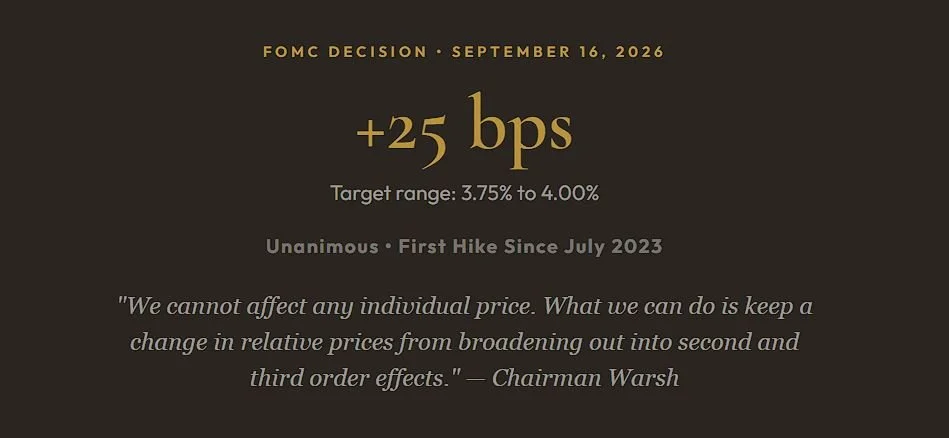
The Federal Open Market Committee raised the federal funds rate 25 basis points on Wednesday, to a target range of 3.75 to 4.00 percent. The vote was unanimous. It is the first increase since July 2023. Then Chairman Warsh explained that the Fed cannot fix the thing causing the inflation. That sentence is the entire meeting.
CPI and PCE Are Telling Different Stories
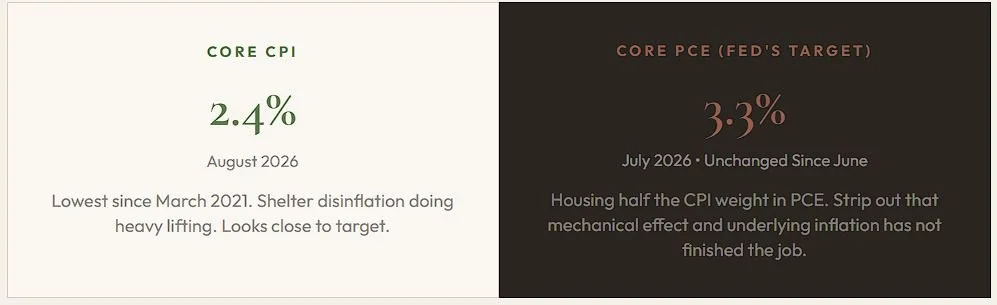
The Fed targets PCE. Not CPI. The gap is unusually wide.
The easy read of the August CPI print is that inflation is an energy story and nothing else. That read is incomplete. The Fed does not target CPI. It targets PCE, and the two are telling different stories right now. Core PCE was 3.3 percent in July and has not moved since June. Core CPI was 2.4 percent in August. A gap that wide is unusual and it runs backwards from the historical pattern.
The marginal inflation impulse is imported through energy. The base it is landing on is not clean. Warsh pointed to too many categories still running above 3 percent on six and twelve month bases.
A Business Input Embedded in Everything
Gasoline is a consumer expense. Diesel is a business input, embedded in freight, agriculture, rail, and construction. It enters the cost structure of goods and services that have nothing to do with fuel.
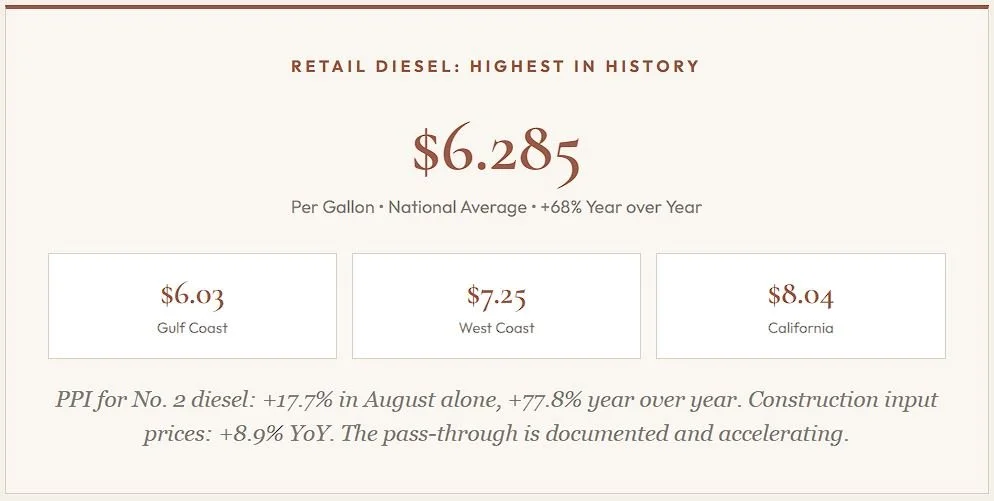
“Diesel does not show up as energy on a CPI line. It arrives inside something else, on a two to four quarter lag. It is diesel and tariffs arriving as construction costs, freight surcharges, and food prices.”
2027 Relief Was Removed
The 25 basis points was priced in. The Summary of Economic Projections was not.
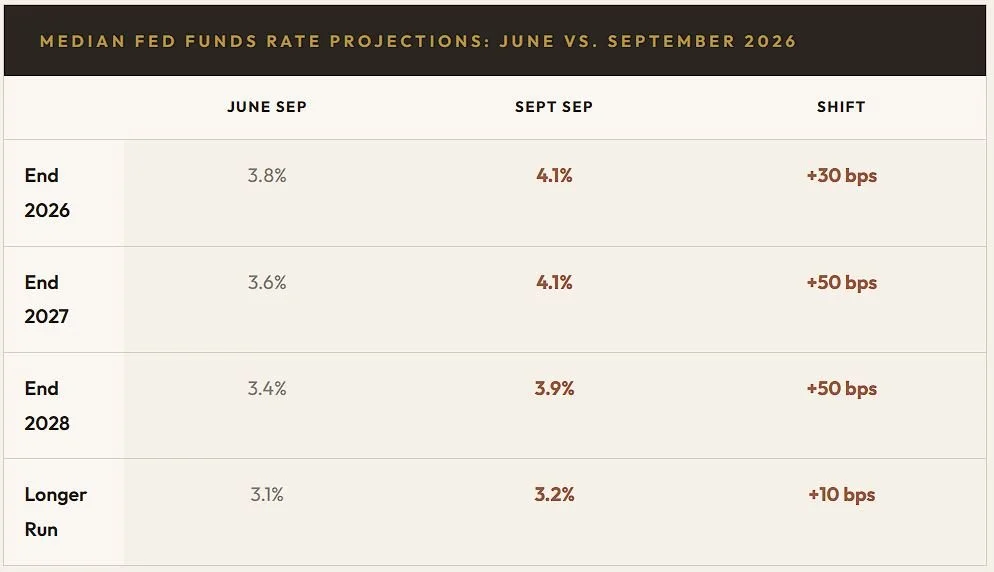
Twelve of eighteen participants place the year-end 2026 midpoint at 4.125, implying one more increase before December. Four see 4.375. Seventeen of eighteen judge inflation risks as weighted to the upside. The ten-year Treasury broke above 5 percent intraday for the first time since October 2023.
What was removed is the 2027 relief, which is precisely the horizon most real estate underwriting was leaning on.
Three Paths, All Answerable
-
Core PCE holds near 3.3% while energy runs hot. Warsh's argument holds. Hiking stops after one more. December meeting is a hold. The 10-year stabilizes near 5%.
-
Middle East supply normalizes. Diesel retreats. Core stays put. December is live for a hold rather than a hike. The constructive scenario for 2027 underwriting.
-
Diesel pass-through reaches core categories. The four dots at 4.375 become consensus rather than tail. EIA projects distillate inventories below 100M barrels this fall with no cushion. The distribution skews higher.
Underneath all three paths, 2027 underwriting should assume the cost of capital stays where it is and gets paid from operations rather than from the rate cycle. That is a harder deal to find. It is not a harder deal to hold.
-
The Fed hiked 25 bps to 3.75-4.00%, unanimously, for the first time since July 2023. Warsh framed it as preventing an energy shock from broadening into second and third order inflation effects. -
Diesel at $6.285/gal is the inflation channel that matters. PPI for No. 2 diesel rose 77.8% year over year. Construction inputs up 8.9%. It does not show up as energy on a CPI line. It arrives inside something else on a lag.
-
The dot plot removed 2027 relief. September median for end-2027 is 4.1%, up from 3.6% in June. That is precisely the horizon most real estate underwriting was leaning on for refinance assumptions.
-
Core CPI at 2.4% and core PCE at 3.3% are telling different stories. The Fed targets PCE. Shelter disinflation is doing heavy lifting in CPI that it cannot do in the index the Fed watches. The base is not clean.
Underwrite to Operations, Not the Rate Cycle
A 2027 exit priced on cap rate compression and cheaper debt no longer has a source in the Fed's own numbers. Underwriting that survives this assumes the cost of capital stays where it is and gets paid from operations rather than from the rate cycle.
“That is a harder deal to find. It is not a harder deal to hold. The barbell holds.”