

Q3 GDP grew 3.4%. Real wages fell 0.7%. Gasoline is up 34%. The 30-year mortgage is at 7.24%. By the measures Washington cites, this is a good economy. Most voters do not see it that way. The reason is in the data.
This morning I sat in on a closed-door macro briefing with a group of family office principals and allocators. The strategist leading it opened with the sign James Carville hung in the 1992 Clinton war room. It had three lines: change versus more of the same, the economy, and don't forget healthcare. Thirty-four years later, all three still apply.
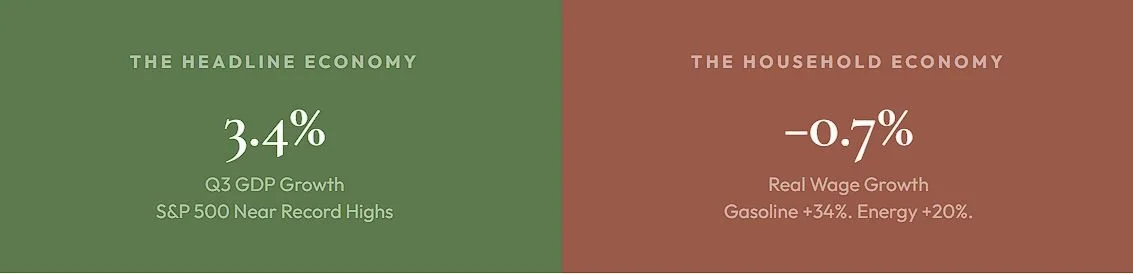
Two economies. One ballot.
GDP, Business Investment, and Markets

Inflation, Energy, and Real Wages

Brent crude fell 7.6% yesterday to $104.77 on reports of U.S. and Iran talks. The room's view was that the market is pricing peace before it arrives. Without a durable settlement, energy keeps affordability under pressure no matter who wins tonight.
7.24% Is Not Historically Extreme. The Lock-In Effect Is.
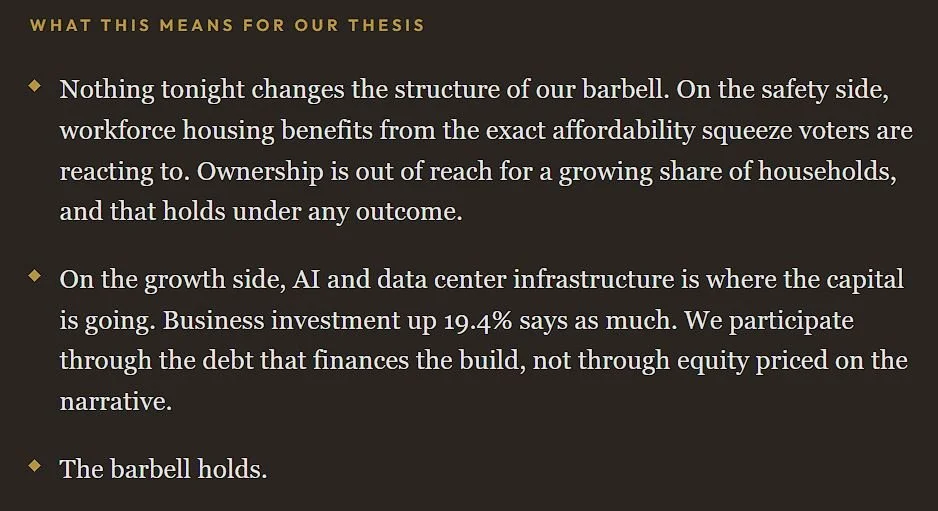
The strategist's point was that the rate itself is not historically extreme. The anchor is. A decade of near-zero rates locked millions of owners into sub-4% mortgages, and they are not selling. Inventory stays tight and prices stay high.
Younger households have adjusted. Many now assume ownership is out of reach without family help, and they are spending on experiences instead of saving for a down payment. For housing markets, that means renters stay renters longer.
The rate is not the problem. The anchor is. Millions locked into sub-4% mortgages will not sell. Inventory stays tight. Prices stay high. Renters stay renters longer.
Tech Is Right-Sizing. Do Not Extrapolate to the Whole Economy.
Unemployment rose to 4.2% in September. Payrolls grew by only 29,000. Microsoft extended a voluntary exit offer to about 60,000 eligible employees. Barclays plans roughly 5,000 job cuts. The room's caution: tech and finance overhired during the pandemic and are now right-sizing. Those workers will move into other industries, often at lower pay, and may speed up AI adoption outside big tech.
No Mandate. Slow Results. Gridlock, Not a Policy Reset.
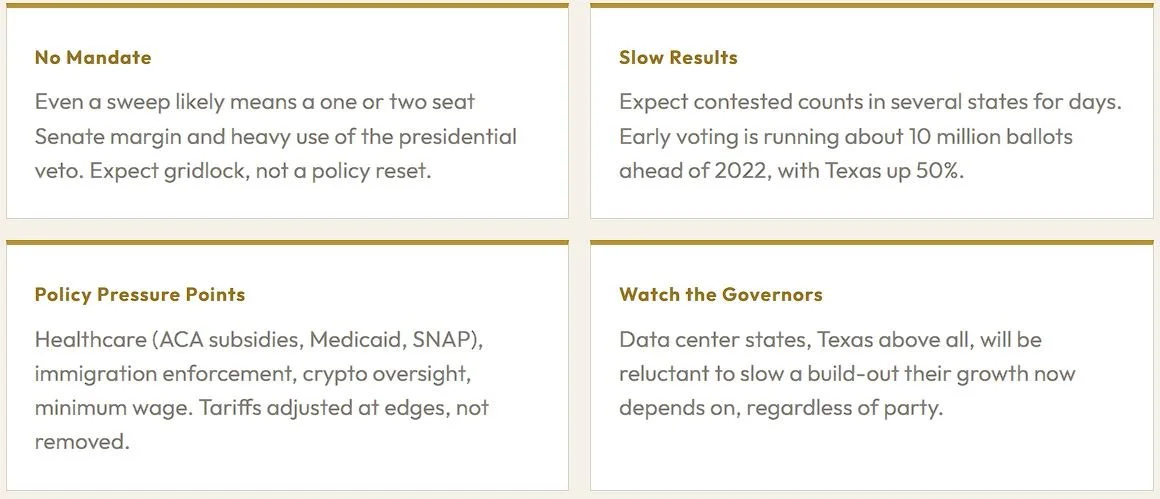
The sobering part: neither party has a credible plan for affordability or the deficit. That points to inflation and rates staying higher for longer, with rates range-bound rather than breaking sharply either way. Affordability will likely be the central issue again in 2028.
Required Spending Over Discretionary. Physical Over Narrative.
-
Energy, materials, and industrials make up just 13.2% of the S&P 500, against a backdrop of reindustrialization, grid rebuilds, and rising defense budgets. ASCE puts the U.S. infrastructure investment gap at $3.7 trillion through 2033. Transformer backlogs run two to three years.
-
Mega-caps that cannot show cash flow discipline behind their capex are being marked down 30% to 40% in weeks. Those that can are being rewarded. The question is not whether AI is a bubble. It is who has the balance sheet to finish the build.
“Whatever your view on any of the above, today is the day it counts. Early turnout is at record levels, and several races that will shape tax, healthcare, and energy policy for the next two years are inside the margin of error.
Vote, and we will regroup Thursday with what the results mean for capital.”
Sources: BEA Q3 2026 GDP; BLS CPI September 2026; BLS Real Earnings; Freddie Mac; S&P Dow Jones Indices; AP Early Voting Data; ASCE 2025 Report Card. This newsletter does not endorse any candidate or party. For informational purposes only.