

The 71 Percent Problem.
The hardest input in data center underwriting is not power anymore. It is permission. 71% of Americans oppose a data center being built in their own community. That is not a PR problem. It is a permitting risk, a timeline risk, and a political risk that belongs in every model.
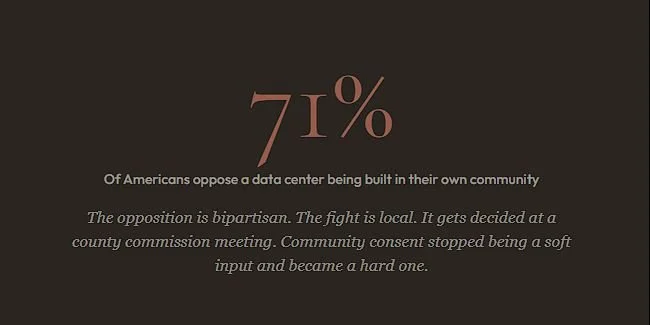
If you are being pitched data center exposure right now, and most allocators are, that 71% is not somebody else's PR problem. It is a permitting risk, a timeline risk, and a political risk. Sponsors treating community opposition as a public relations exercise are the ones who hand you a stranded asset: entitled land, signed power contracts, and a project that cannot get built.
No Serious Argument Here

But the composition of that demand is changing in a way that explains everything else in this piece.
69% of middle-market real estate sits outside traditional closed-end fund structures, in joint ventures, syndications, programmatic partnerships, and deal-by-deal relationships. That fragmentation is the gap institutional capital is now designed to fill.
Returns at the Top Are Compressing. The Middle Is Where the Math Works.
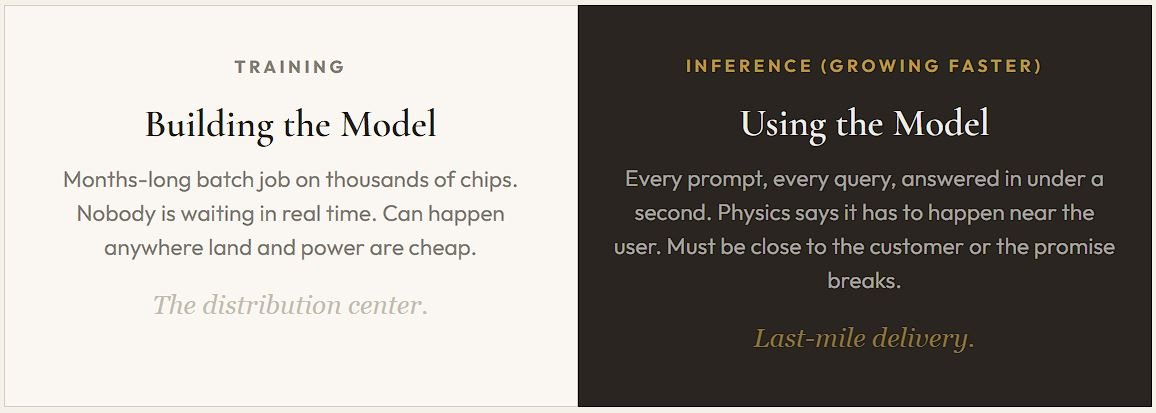
The IEA reports AI energy use has already shifted decisively toward inference. McKinsey projects inference surpasses training in 2027. That is why this fight moved out of remote industrial parks and into places where people actually live. Americans did not suddenly turn against AI. The buildings started showing up in their counties.
Real Gains. Not What Gets Promised at the Zoning Hearing.
The cleanest study is from Brookings. They compared counties that got a facility against counties where one was announced and then canceled. That design matters, because data center counties were already growing faster before anything was built.
Their finding: data centers do create local jobs. Data-processing employment rises 56% over the first decade. Total private employment rises 4 to 5% over five to six years. Real gains. Also nowhere near what gets promised at the zoning hearing. And the gains depend almost entirely on geography. Metro counties see multiplier effects through restaurants, retail, and services. Rural counties often see fewer than 100 permanent employees, with specialized services imported from outside the county.
$1.6 Billion in Tax Exemptions. What It Bought Is Genuinely Contested.
Virginia runs the largest data center market on earth, and it got there with a tax break. Since 2010, the state has exempted data center equipment from sales and use tax. Qualifying takes only $150 million in capex and 50 jobs, which is a rounding error on a hyperscale build.
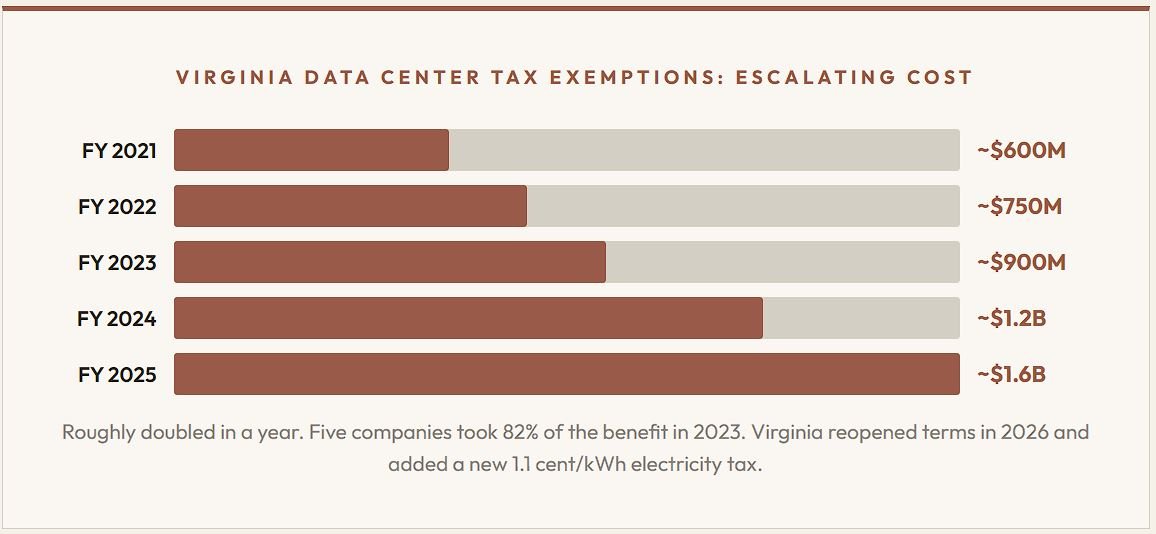
“If your returns depend on an abatement, understand what you actually own. Not a contract. A political arrangement, subject to revision by a legislature whose constituents are the 71%.”
Every One of These Belongs in the Model
-
Metro counties see multiplier effects. Rural counties often see fewer than 100 permanent employees with specialized services imported from outside.
-
Whether the abatement gives away the tax base the community was promised. Virginia reopened the terms nine years before sunset.
-
38 large-load tariffs created since 2018, 30 of them in 2025 and 2026 alone. Every pro forma written before this year assumed a rate regime that no longer exists.
-
Two-thirds of U.S. data centers built or in development since 2022 are in water-stressed areas.
-
Servers can push noise to 96 decibels. Some facilities sit within 50 feet of homes. Setback determines whether you are an industrial neighbor or an unlivable one.
-
Most of the health math is a function of how the electricity gets made. On nuclear or renewables it mostly disappears. On a coal-heavy grid it does not.
-
When 71% oppose and the opposition is bipartisan, there is no lobbying your way out through one party's channels. Community consent stopped being a soft input and became a hard one.
Permission Risk vs. Waiting Lists
We look at data center exposure the same way we look at workforce housing. Durable returns come from assets communities still want in place twenty years out. That is not a moral position. It is a duration position. Sustained local hostility is sustained political risk, and political risk compounds against you in a capital-intensive, long-lived asset.
Which is the whole point of building the portfolio this way. The defensive leg does not carry permission risk.
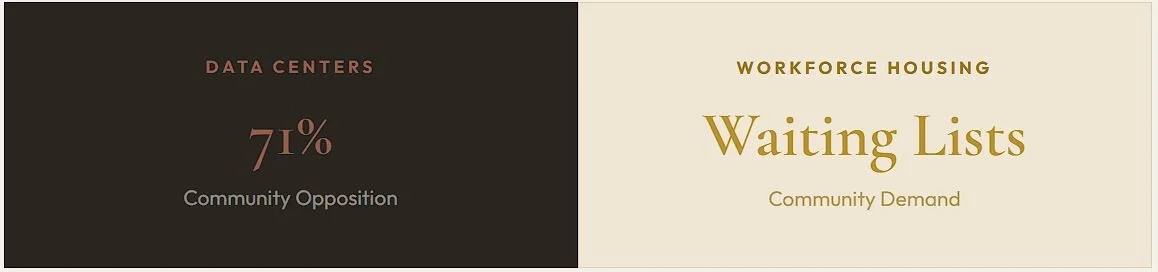
“Workforce housing does not draw 71% opposition. It draws waiting lists. The barbell holds.”